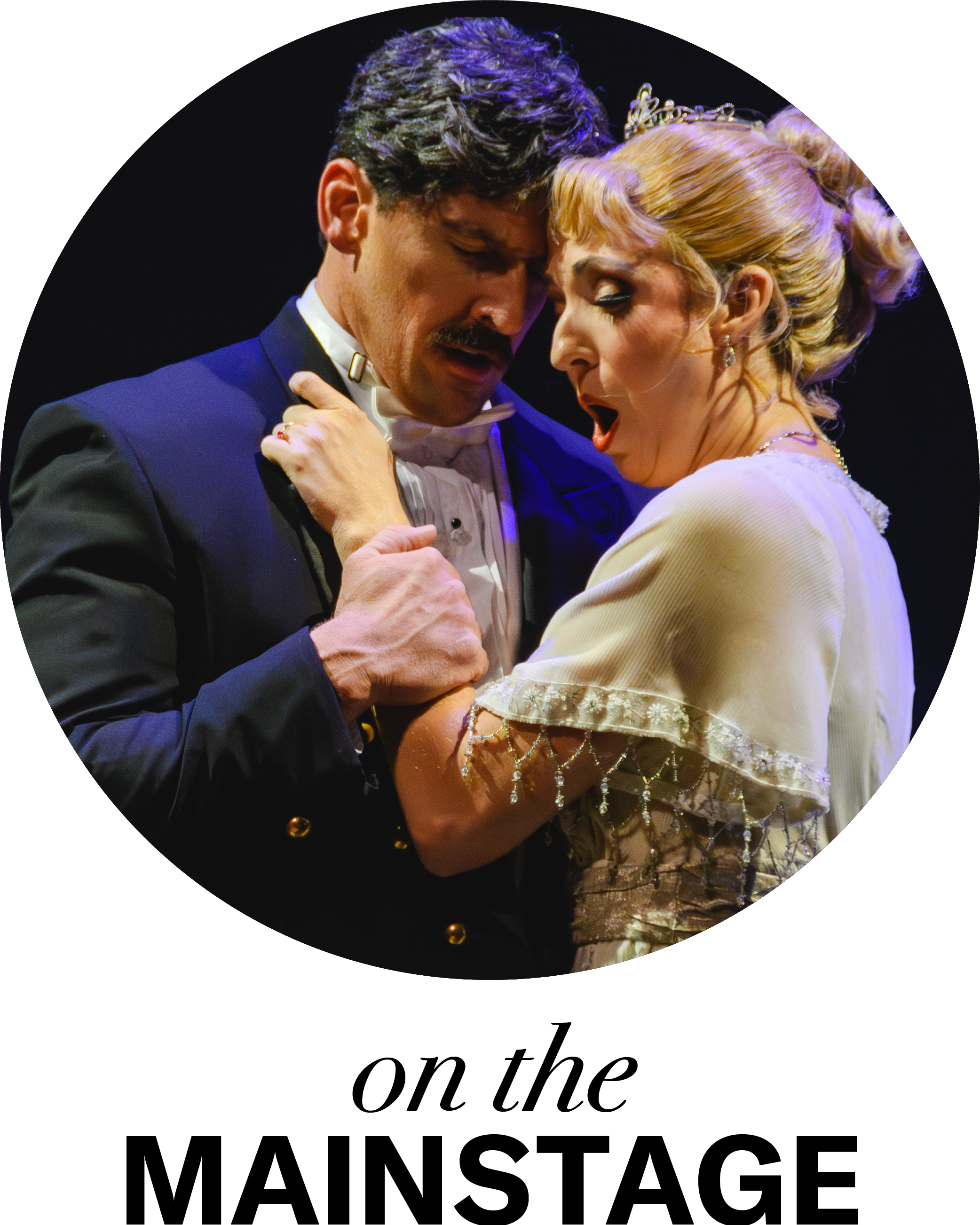
OPERA on the MAINSTAGE

music by Giacomo Puccini
libretto by Giuseppe Giacosa & Luigi Illica
Friday / October 2, 2026 at 7:30 p.m.
Saturday / October 3, 2026 at 7:30 p.m.
Sunday / October 4, 2026 at 2 p.m.
STEINMETZ HALL
Dr. Phillips Center for the Performing Arts
generously supported by Elizabeth Conklin and the National Endowment for the Arts
Sung in Italian with English and Spanish supertitles.
Estimated run time of two hours and thirty minutes with one intermission.
age advisory: PG-13
How do you solve a problem like Madame Butterfly?
Madame Butterfly’s popularity and history of performance is truly unparalleled as it remains one of the most performed operas internationally season after season. And yet, there are several issues inherent to the work that leave presenters, singers, and audiences scratching their heads.
The inherent issue stems from a common thread in many opera and theatrical works: the appropriation of a foreign culture from the source material. Puccini was inspired to write Madame Butterfly while he was in London overseeing a production of Tosca. He attended the play Madame Butterfly: A Tragedy of Japan, which premiered in London in 1900 based on the short story “Madame Butterfly” (1898) by John Luther Long, which in turn was based on stories told to him by his sister and the 1887 French novel Madame Chrysanthème by Pierre Loti. The tragic and gut-wrenching story of Madame Butterfly fortunately led Puccini to compose some of the greatest melodies and orchestral moments in the repertoire, but unfortunately, it placed him in a culture and country about which he knew very little.
Simultaneously, orientalism (romantic notions about places far away) was also incredibly popular at that time, allowing European artists to grapple with issues that were seen as taboo in their own “civilized” societies. Amidst unreliable sources and the prevalence of orientalism, it is no wonder Madame Butterfly includes multiple examples of a misrepresented culture and stereotypes.
A primary example of this in the opera and truly in all Western media is the treatment of the geisha profession, as evidenced by Cio-Cio San expressing that as a geisha, she danced in the streets for money. In reality, geishas are highly respected, refined entertainers who go through years of training. Other examples include her intolerant uncle the Bonzo, who is portrayed as Buddhist and does not reflect the religious tolerances within Japan at the time, the hypersexualization of Asian women, and the perpetuation of the myth of American exceptionalism. Even the gripping ending of the opera as written in the stage notes by Puccini mistakenly reflects Japanese customs of the time.
All of that aside, Madame Butterfly remains one of the most well-known operas in the repertoire. To ignore the impact of Puccini’s lush score and enduring story would be to ignore a jewel in the operatic catalogue, while also removing one of the repertoire’s relatively few prominent leading roles frequently performed by Asian singers. Now, don’t get started on the topic of typecasting. That is a can of worms for another day.
So, what do we do with Madame Butterfly, then? Well, a helpful step is to rely on the expertise of cultural consultants and Japanese specialists who can advise on the approach to handling orientalist aspects of the opera, leading to a greater celebration of Japanese culture married with Puccini’s powerful score. Cio-Cio San can then be seen as not a “giggling geisha” but a powerful young woman with agency, hopes, and dreams. Her wedding includes traditional Shinto practices, reflecting the more probable religion of her character. And the final scene…? Well, you’ll just have to see for yourself.
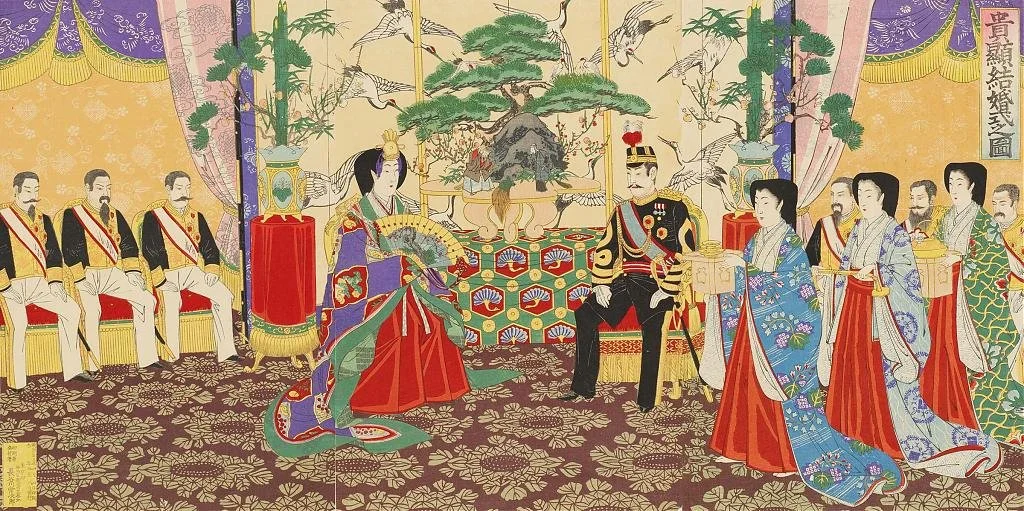
Illustration of the Shinto ceremony at the wedding of Crown Prince Yoshihito and noblewoman Sadako Kujō in 1900. Yôsai Nobukazu (楊斎延一), woodblock print, ink on paper, 貴顕結婚式之図.
worth a watch
worth a listen